LIFELINE is an autonomous first-response pod for city parks. It patrols the paths at walking pace and reaches anyone who falls in minutes, carrying shelter, medical kit and a doctor on video.
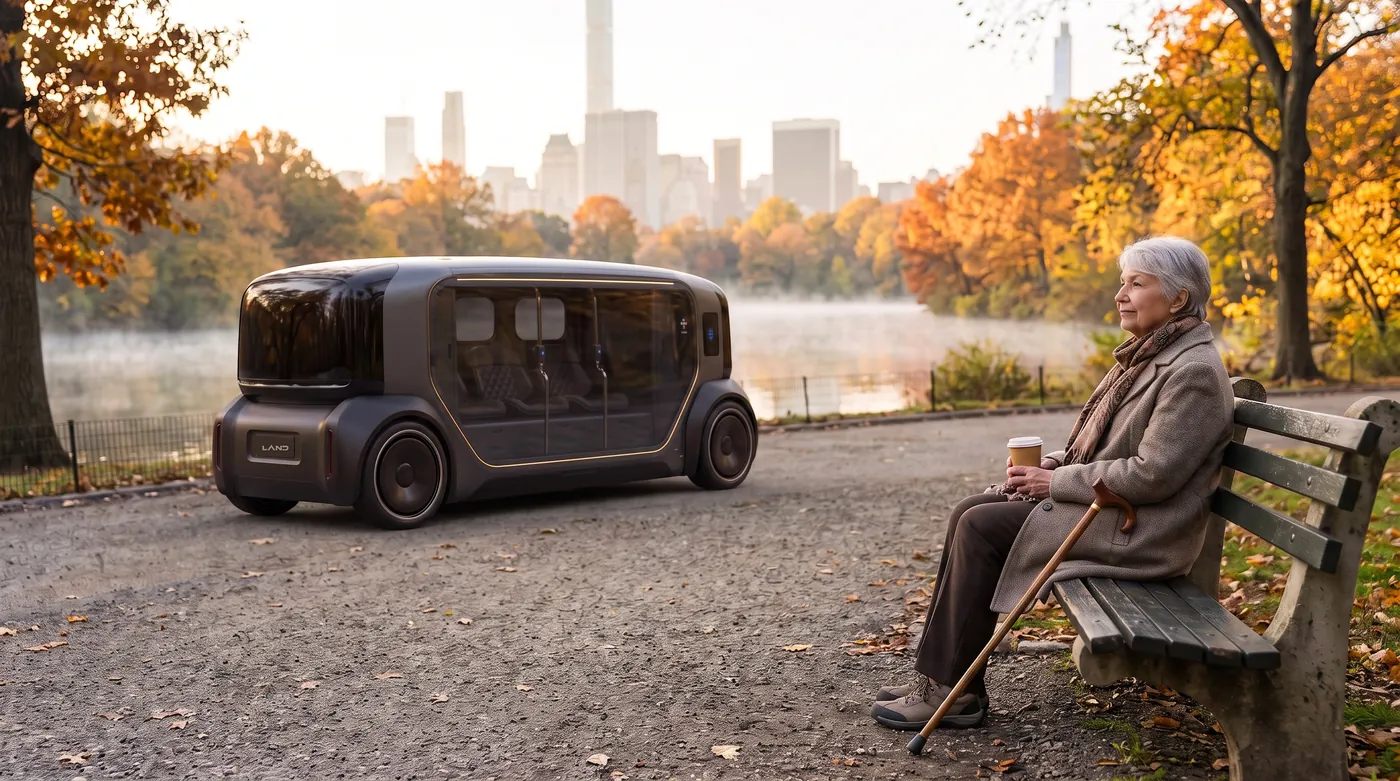
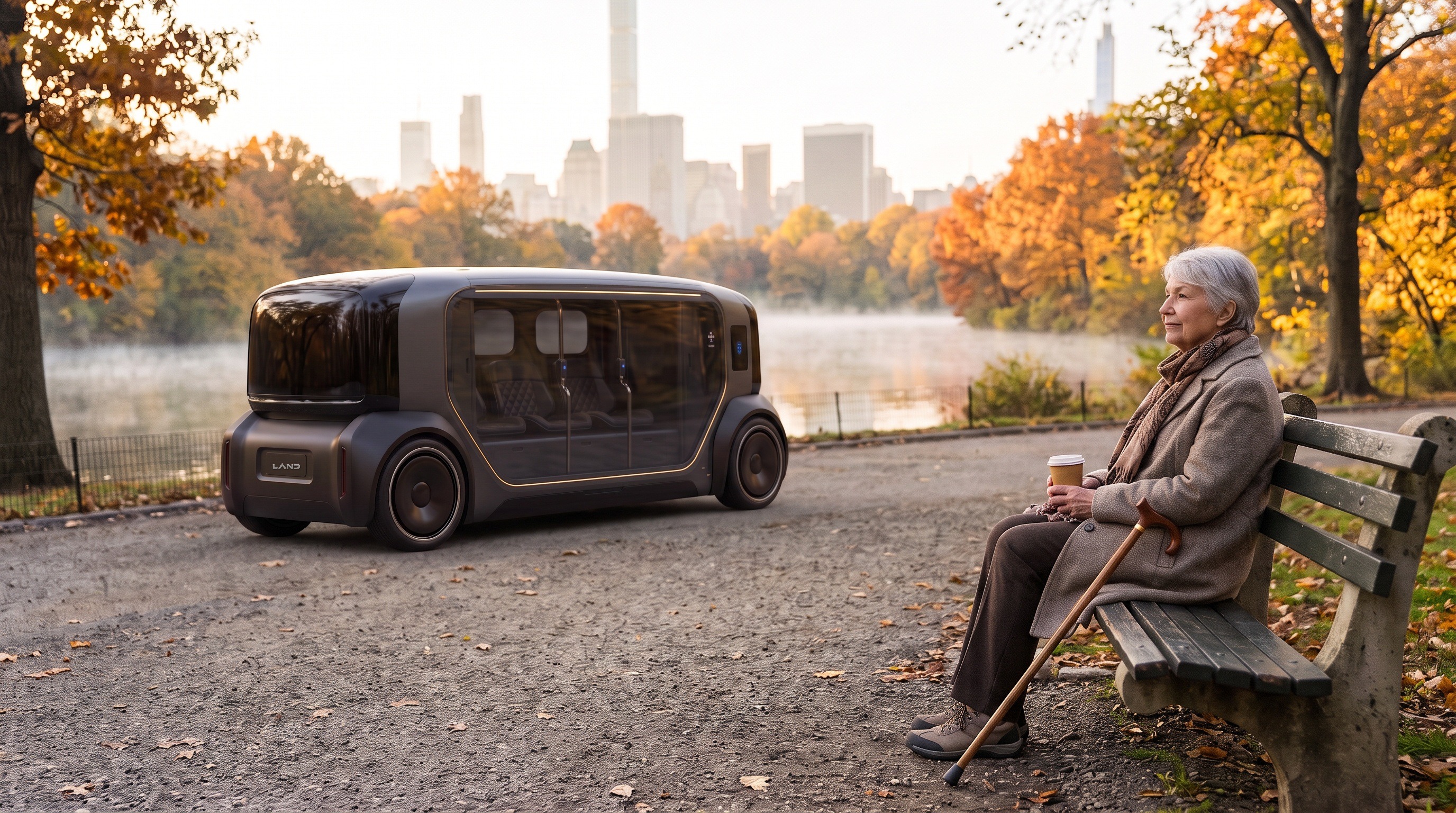
Persona image · Ruth, 78, on the Reservoir path, 7:40 am
Ruth is 78, a retired schoolteacher from the Upper West Side. Every morning she walks the 2.5 km Reservoir loop with a cane she insists she doesn't need. She lives alone. What worries her daughter isn't Ruth's heart. It's the fall nobody sees.
About one in four adults over 65 falls each year.1 In a park the size of Central Park, the hardest part often isn't the injury. It's the minutes spent alone on the ground before help can find you on an interior path. LIFELINE is designed to close that gap.
Who
Older park visitors like Ruth, anyone hurt on a path, and the park medics and rangers who respond.
Where
Central Park, New York. 843 acres and around 42 million visits a year.2 Geofenced to the park's drives and paved paths; never public roads.
What
A small autonomous pod that brings a seat, shelter, medical kit and a live doctor to the person on the ground.
How
Six pods patrol at walking pace. A fall alert, park help point or 911 dispatch sends the nearest one, which then carries the patient to the gate to meet the ambulance.
Why
Ambulances are built for streets, not footpaths. Nobody should wait alone for the first minutes of help.
Operating environment
Six pods. One park.
The fleet runs a patrol loop on Central Park's drives and main paths, spaced so every point on the network sits within about 400 m of a pod. At response speed that's under three minutes. Pods rotate back to the depot for CORE swaps, so coverage never drops.
LIFELINE pod~400 m coveragePatrol loopCall + nearest responseSchematic, not to scale
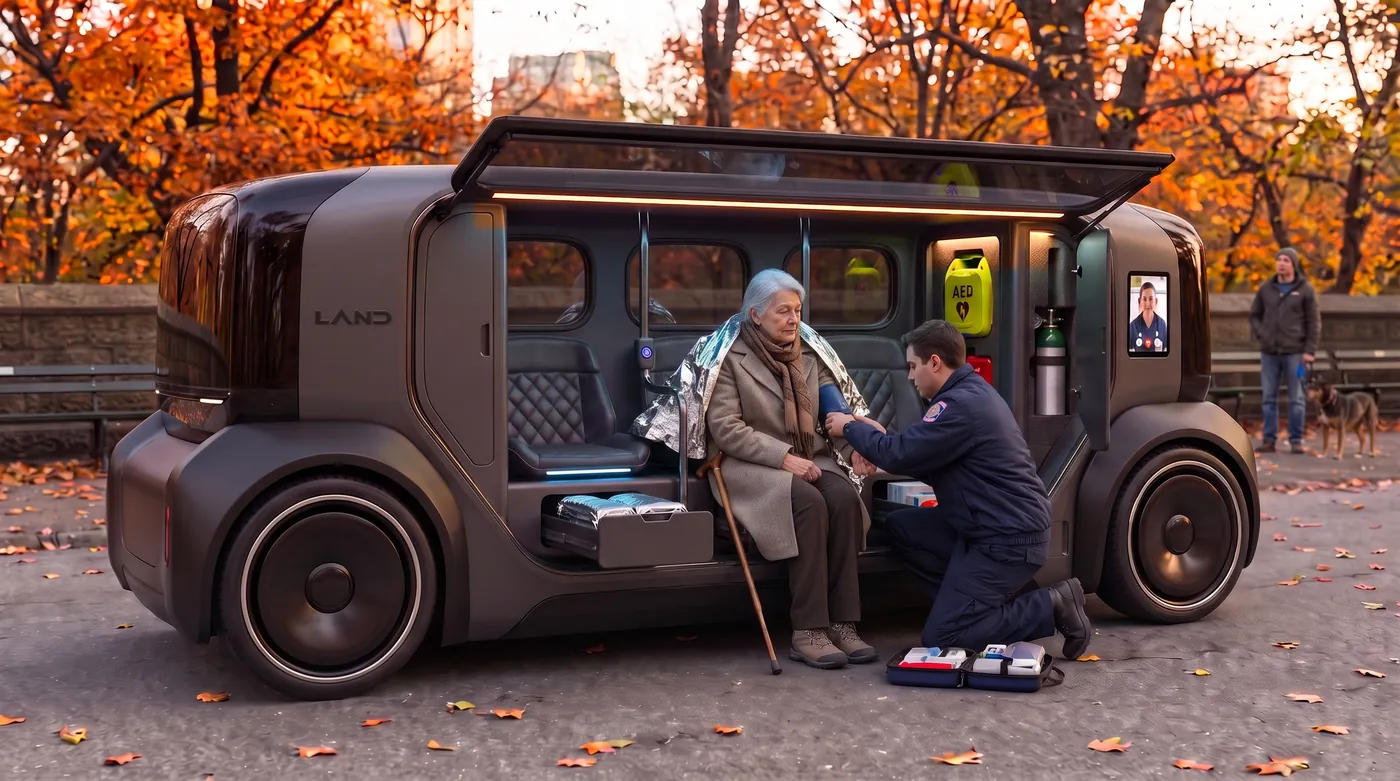
Use-case image · 4:12 pm, the Mall
Use case
The first minutes.
00:00
Ruth goes down
Dizzy on the Mall, she sits down hard. Her watch flags the fall, and a passer-by presses a park help point.
00:15
The nearest pod turns
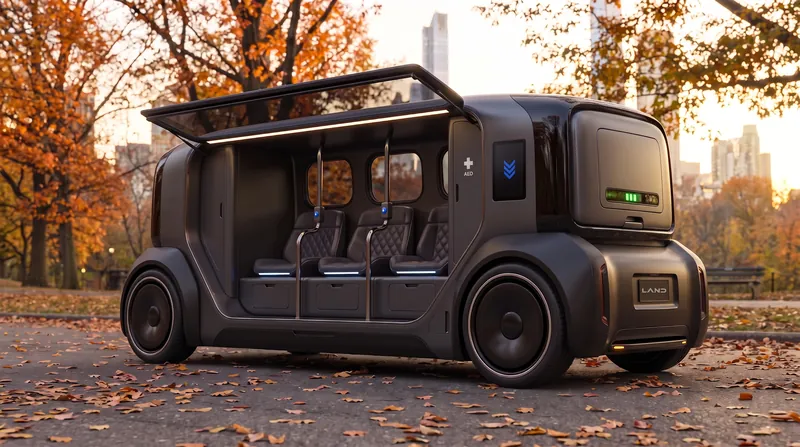
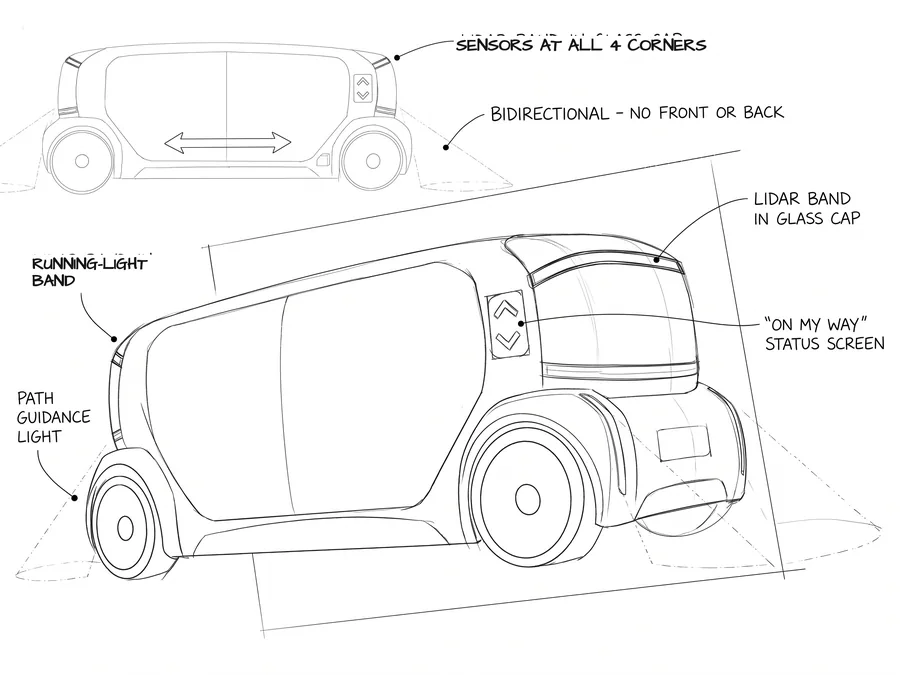
The Parks Response Center confirms the call. The closest LIFELINE is 400 m away on East Drive and reroutes, with "ON MY WAY" chevrons on its side screen and a park medic riding its rear step.
02:30
Canopy up
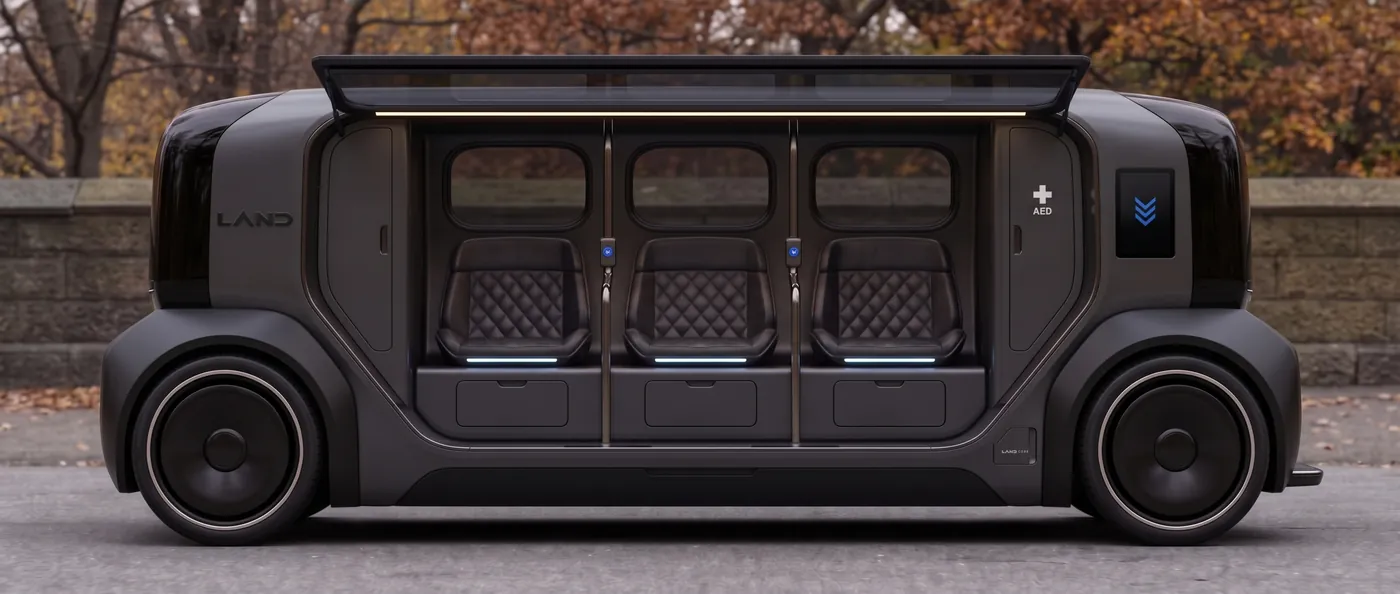
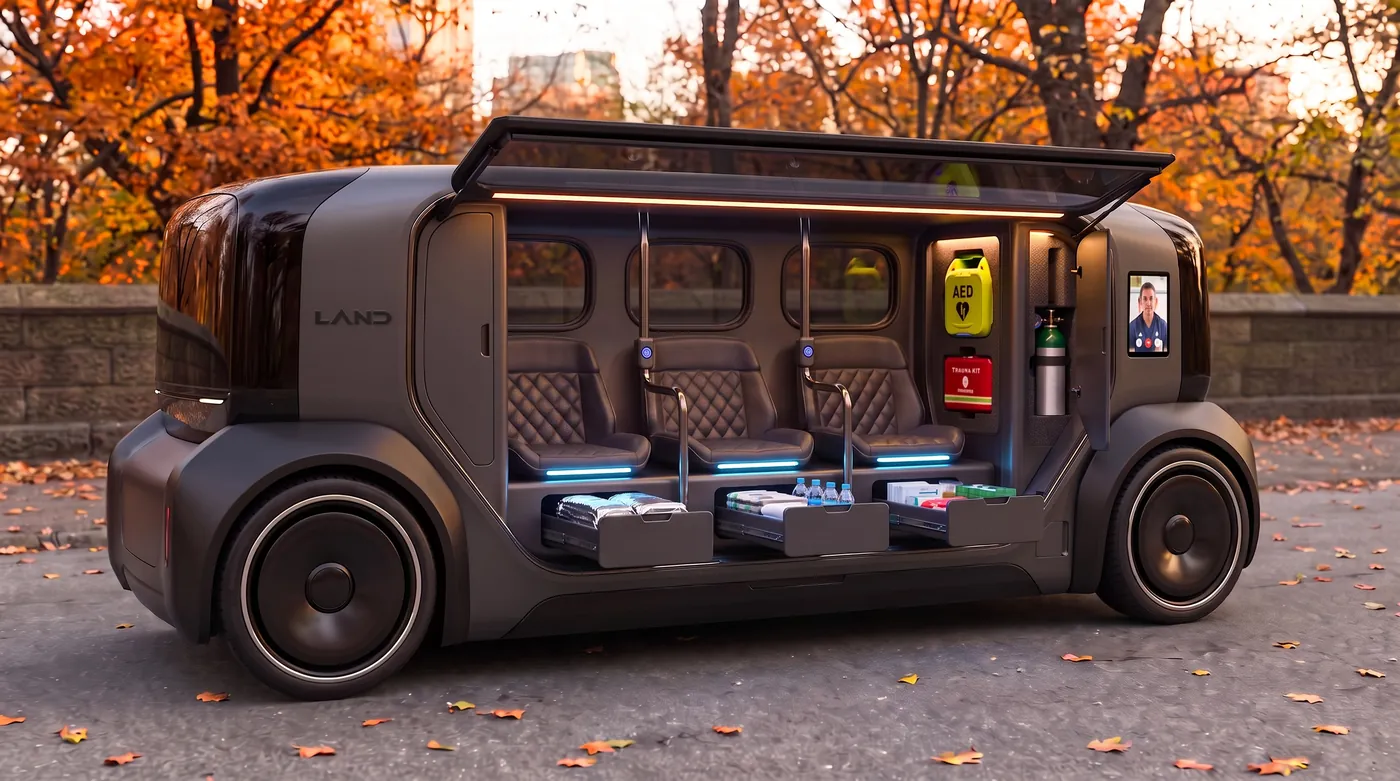
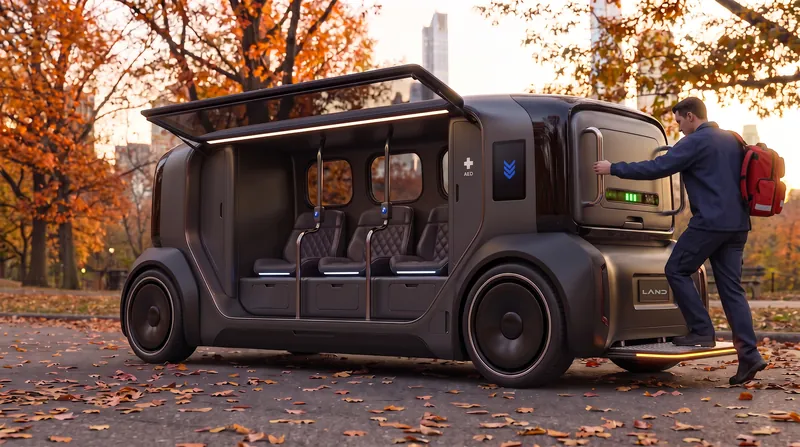
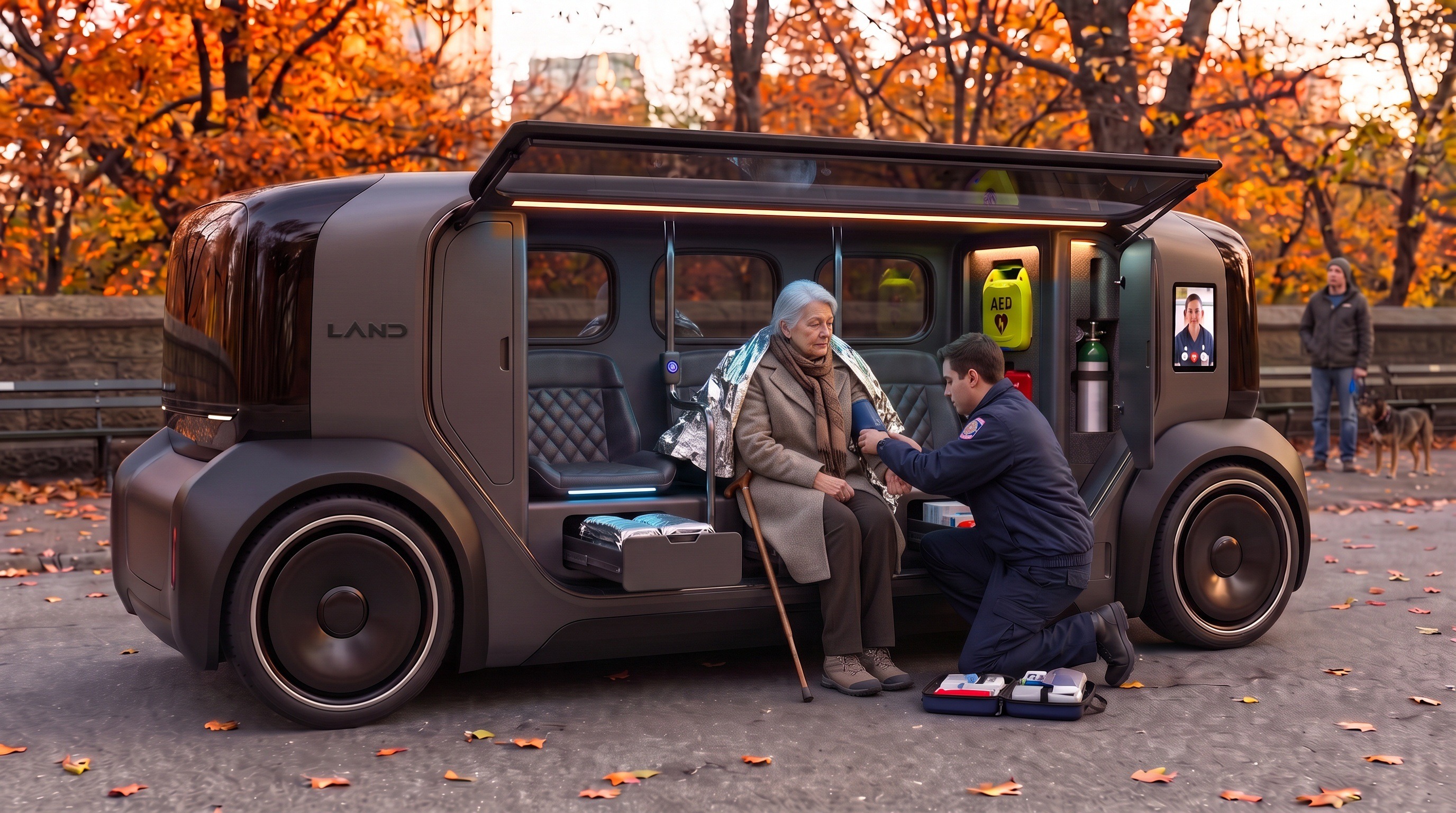
It slows to walking pace among the crowd, stops beside her and lifts its canopy. A quilted seat at chair height and a blue-lit HELP pole are within reach.
03:00
A doctor joins
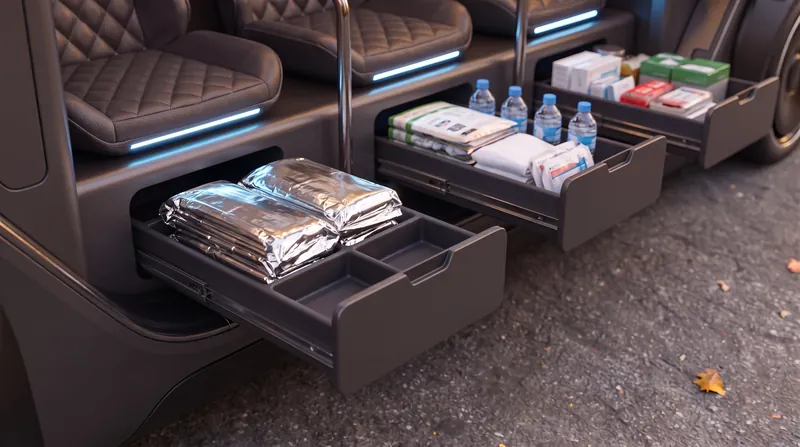
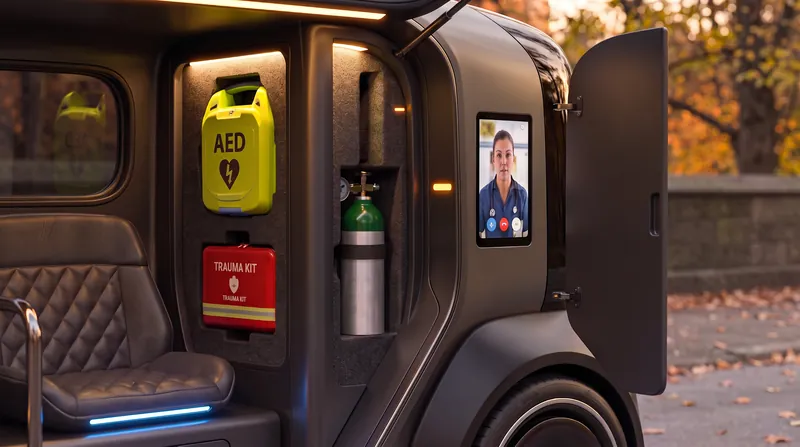
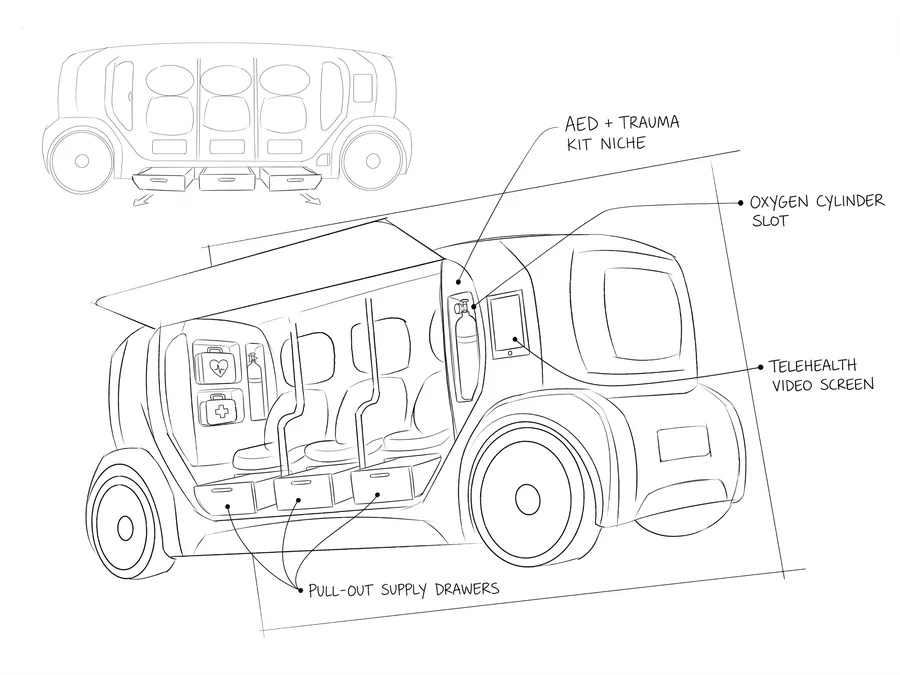
An emergency physician appears on the side screen. Drawers slide out with a thermal blanket, water and dressings. The AED and oxygen are in lit niches, one step away.
09:00
To the gate
Checked, warm and seated, Ruth rides at walking pace to the 72nd Street gate, where the ambulance can actually reach her.
02 · Vehicle design
A calm object, not an ambulance.
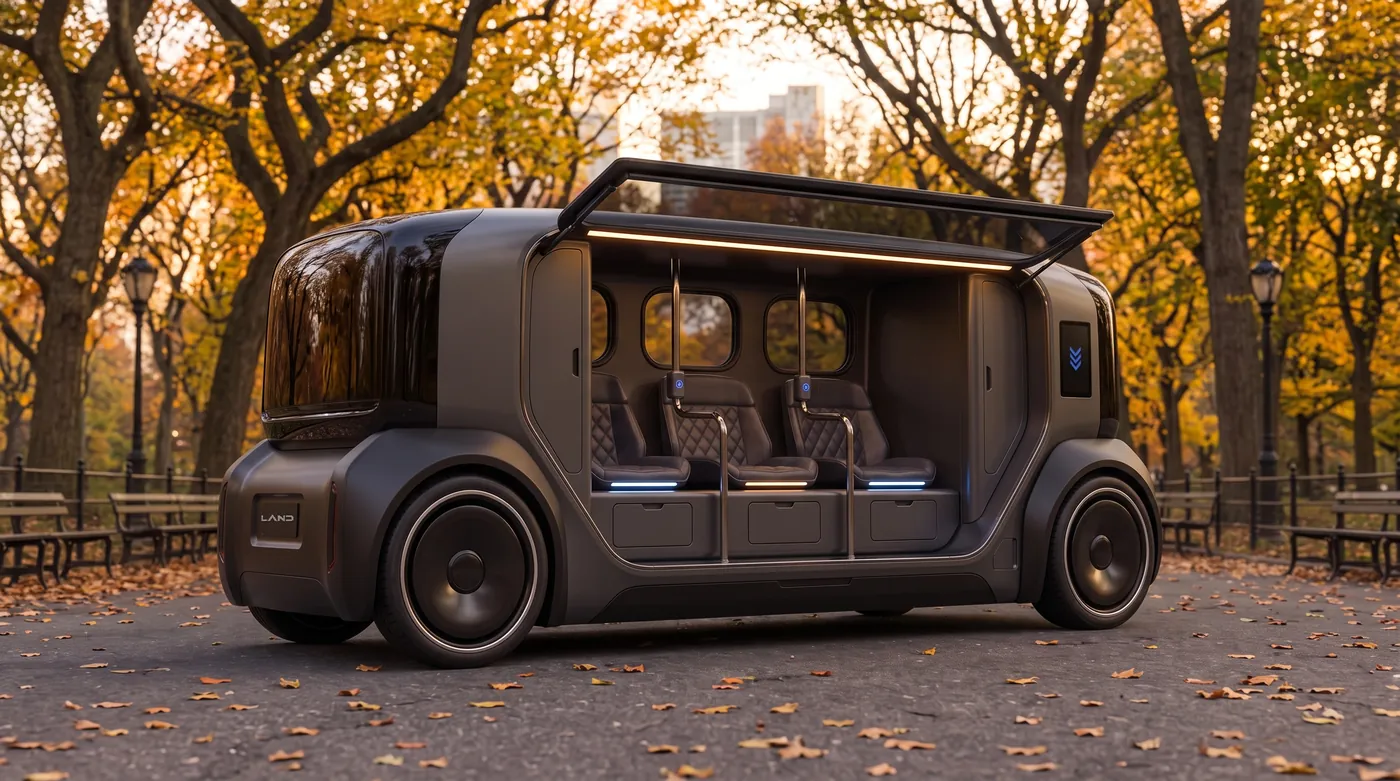
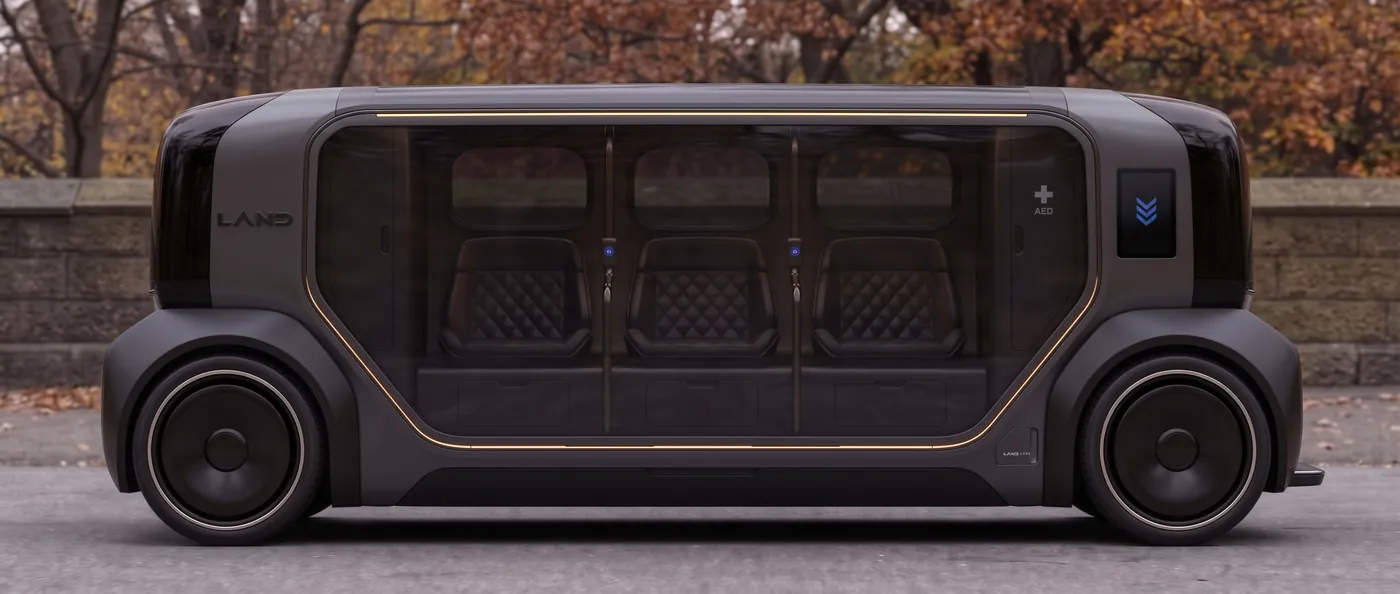
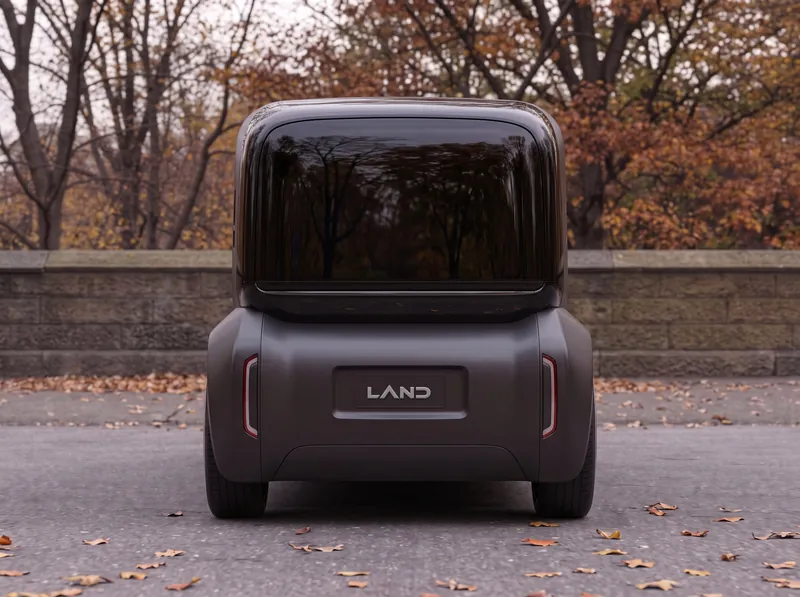
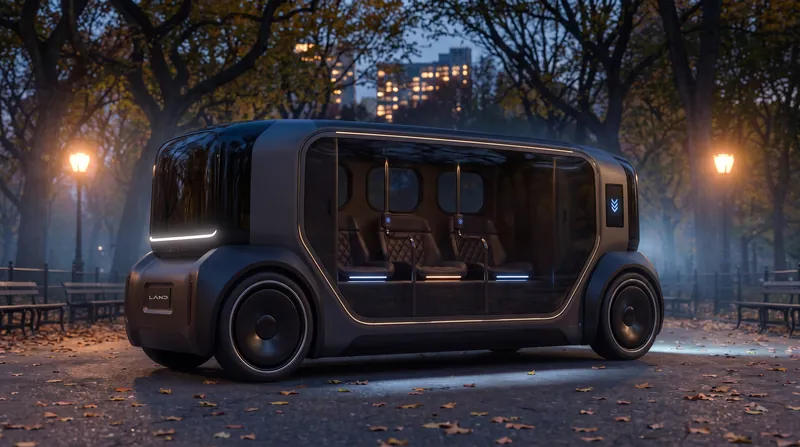
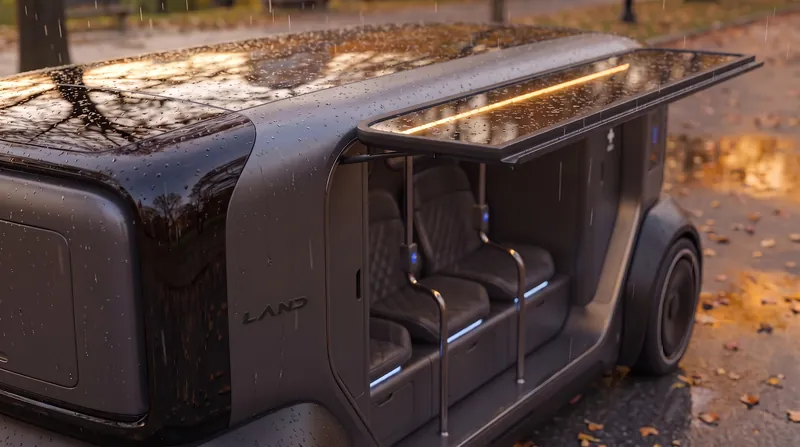
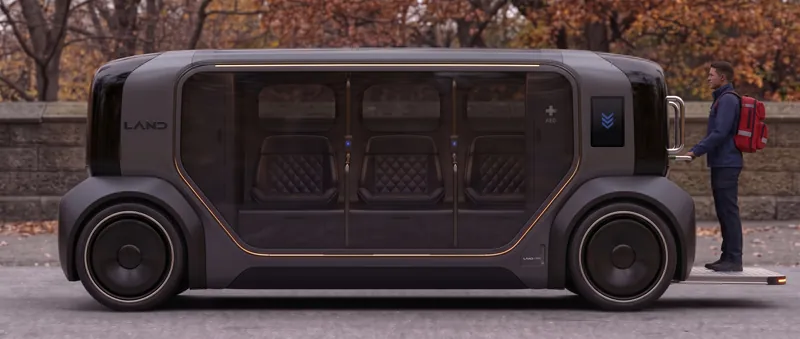
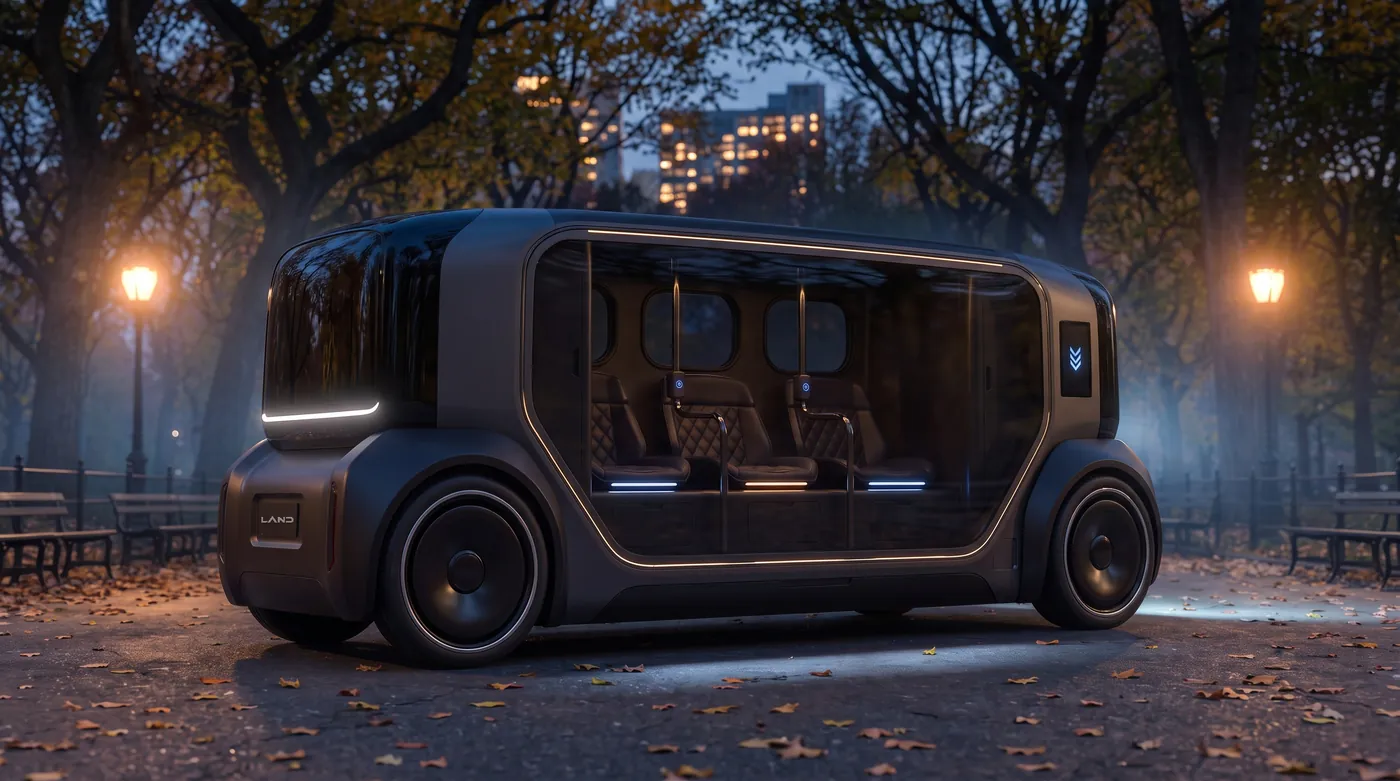
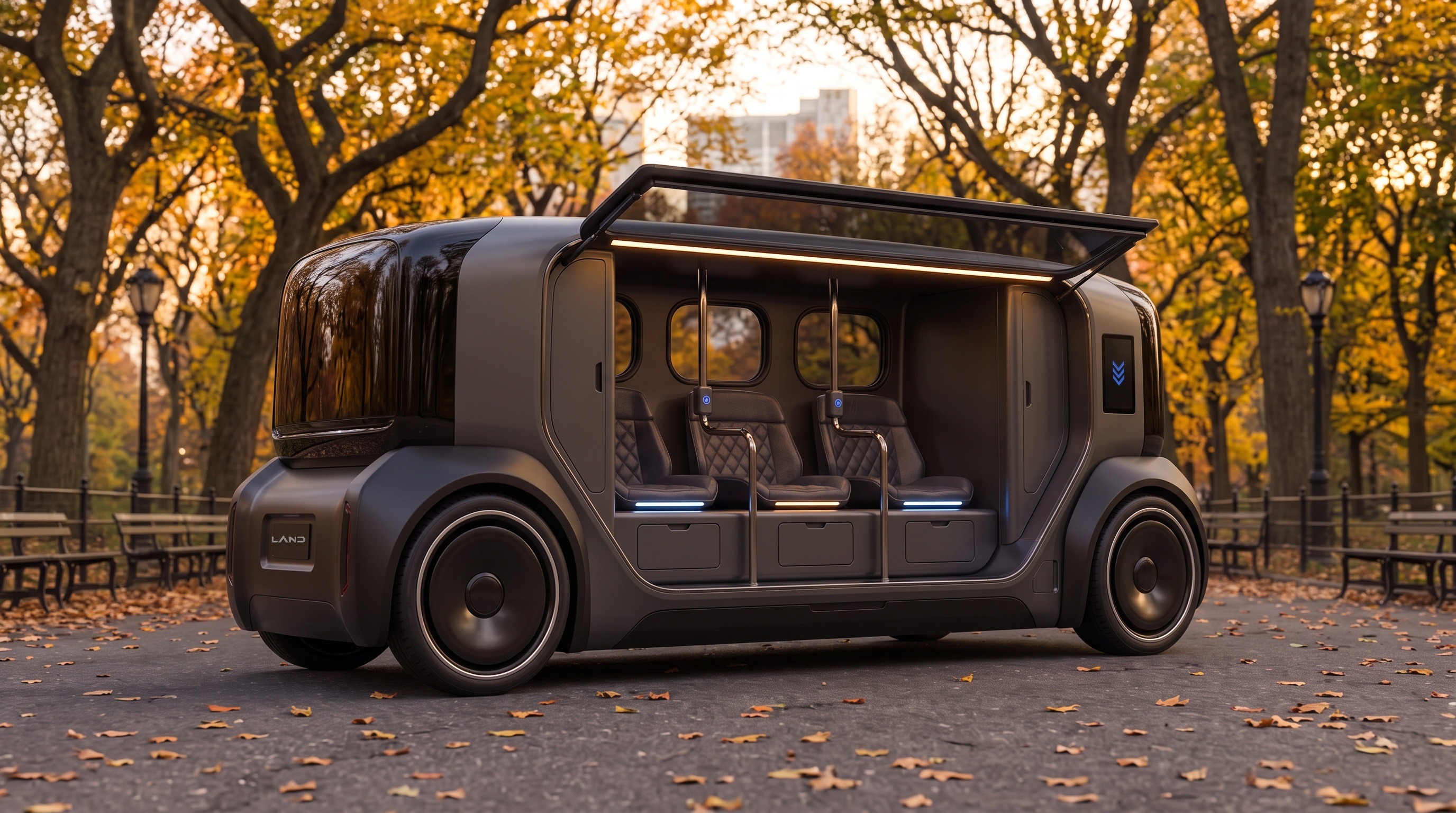
A soft lantern of a vehicle: matte graphite, gloss black glass at both ends, wheels pushed to the corners. It has no front and no back. The long glass canopy lifts the whole side open, so the vehicle becomes a shelter instead of a door you have to climb through. Amber light means "I'm here." Blue means "help."
OpenClosed
Length3,980 mm
Width1,700 mm
Height1,720 mm2,180 canopy open
Wheelbase2,860 mm
Occupancy3 seated+1 medic on the step
Speed6 km/hon paths · 25 max on drives
AutonomyLevel 4geofenced, remotely supervised
Energy4 × LAND CORE72 V · ≈20 kWh
End elevation · identical at both endsService end · CORE bay door and charge barsNight patrol · running band and path light
03 · Package + Experience
Everything within reach.
Built around one moment: someone hurt, sitting down. The floor steps in at 300 mm and the seats sit at chair height (500 mm), so you sit straight in. Supplies are below you, the medical wall is beside you, and the doctor is on the outside where the medic can see too.
Lidar + cameras in all four glass corners
Gull-wing canopy lifts to 2,180 mm and becomes a roof
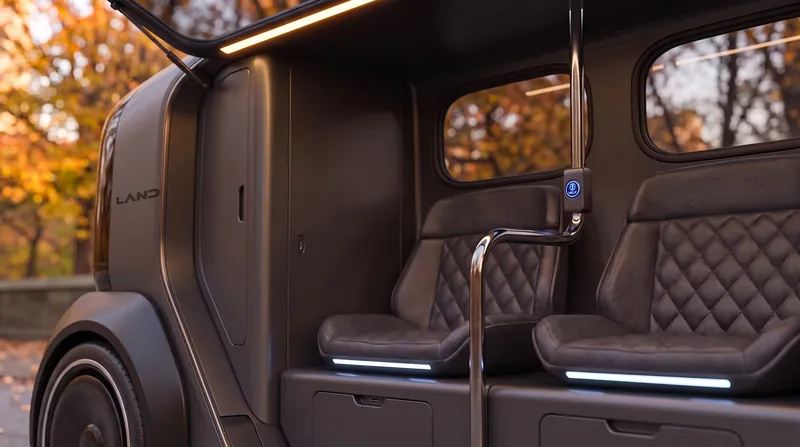
Three seats at 500 mm, a HELP button on every pole
Supply drawers: warmth, water + dressings, meds + diagnostics
Medical wall: AED, trauma kit, oxygen in lit niches
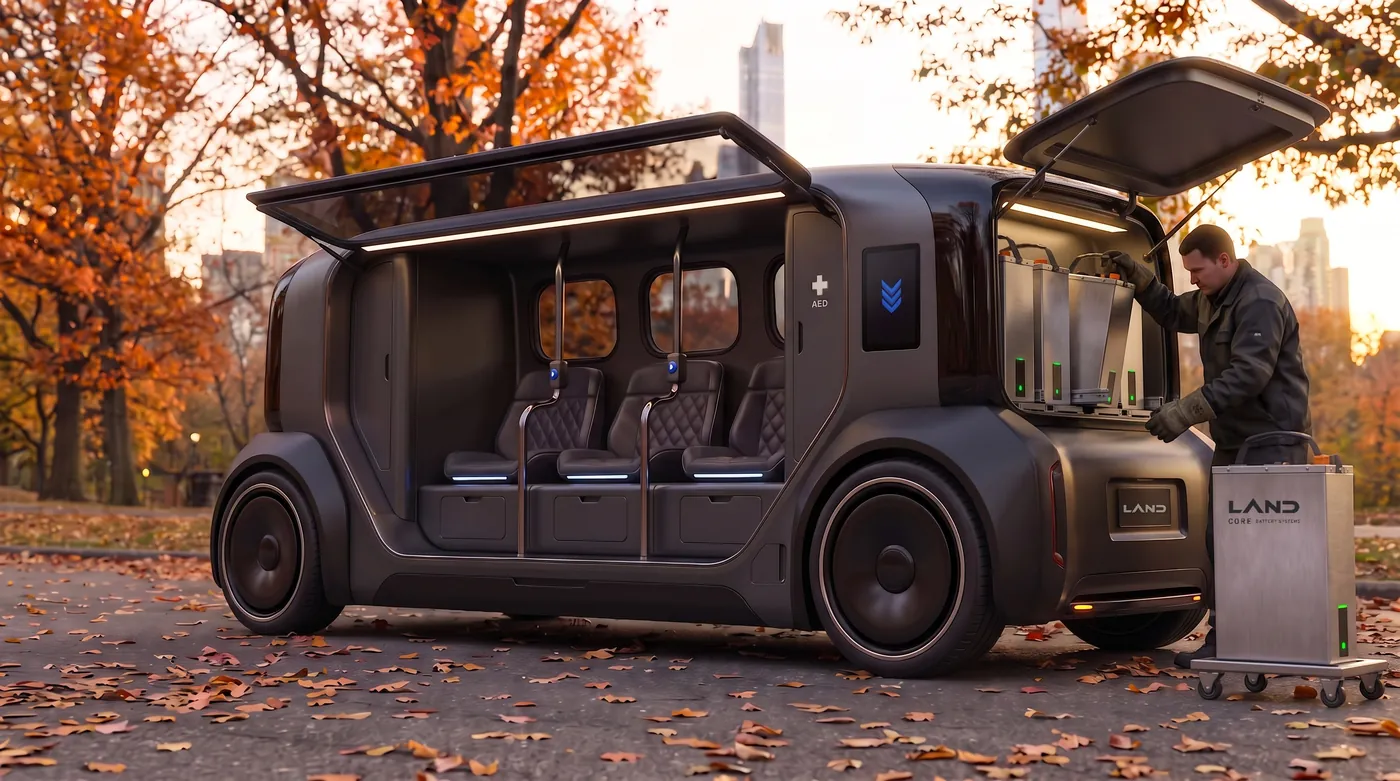
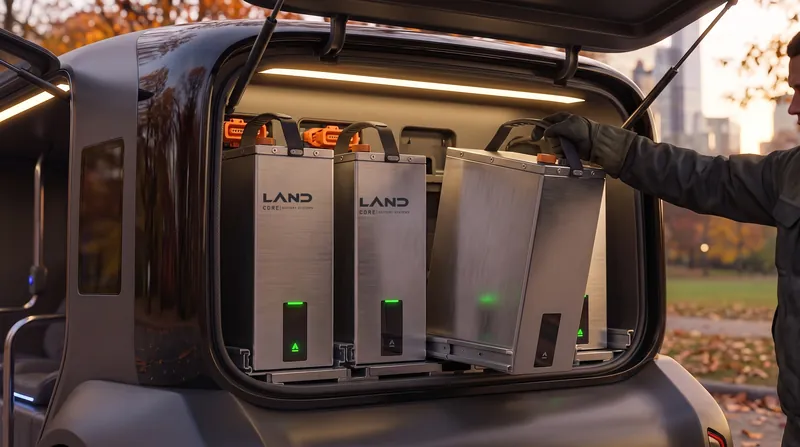
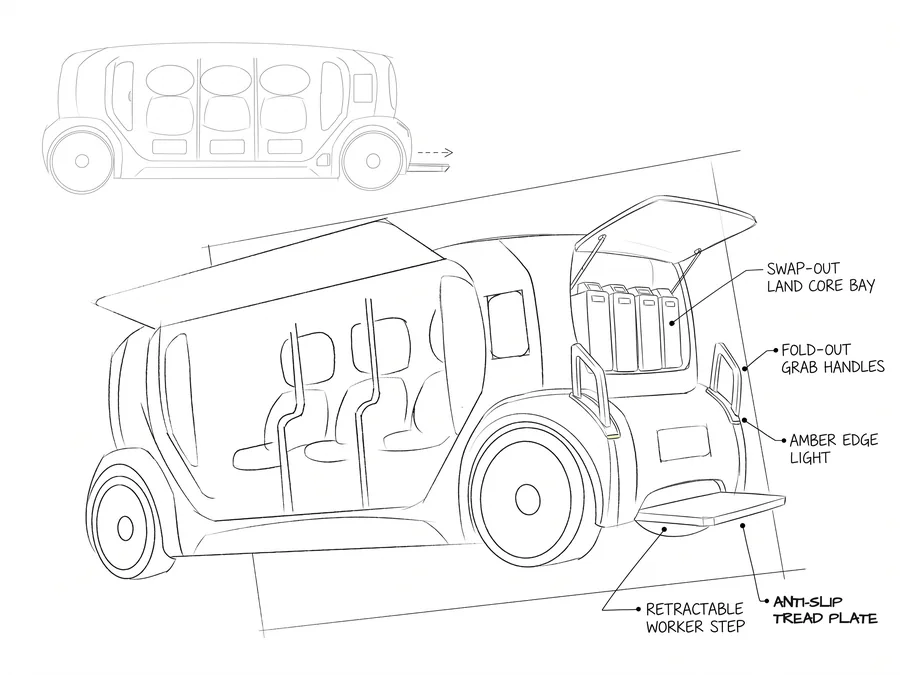
4 × LAND CORE standing upright in the service-end bay
Worker step slides out 550 mm with fold-out grab handles
Amber canopy lightPresence at dusk; it tells the crowd where to give room.
HELP on every poleOne press opens a voice line to the Response Center.
Chair-height seats500 mm, quilted and wipe-clean. A blue light marks the free seat.
Three supply drawersThermal blankets · water and dressings · medication and diagnostics.
AED + trauma kitIn lit, foam-lined niches. Unlocked the moment the canopy opens.
OxygenStandard cylinder in a strapped slot beside the medical wall.
Telehealth screenAn emergency physician on video, facing out so patient and medic both see them.
Tap the numbers to explore
Seats and grab polesSupply drawers
04 · CORE
Swap, don't wait.
Four LAND CORE 72 V modules stand upright in a sealed bay at the service end, about 20 kWh in total and enough for a full park day. A ranger slides one out by its handle with no tools, and spares charge from ordinary outlets at the park depot. Because CORE also works away from the vehicle, a module can be carried to an incident to power lights, a heater or medical equipment.
Service end, bay open · a charged module waits on the trolley
Modules ride on slide rails and dock to rear connectors
WhereService-end bay, behind a sealed lift-up door. Low and close to the rear axle.
How manyFour upright 72 V modules, ≈20 kWh total.
SwapUnder a minute per module, by hand, no tools.
ChargeSpares charge overnight from standard outlets at the depot.
Power TapPull a module to run lights, a heater or kit at a scene.
StatusCharge bars on the bay door show the state of the pack.
05 · Key features
Built for the worst minute.
01
The worker step
A 550 mm tread plate slides out from under the service end, and two grab handles fold out of the glass cap. A park medic rides along at walking pace and steps off at the scene. When stowed, it disappears flush under the bumper.
02
A canopy that's a roof
The whole side lifts. In rain it becomes a dry shelter over the seats, and at night its amber edge is a beacon a medic can find from across the lawn.
03
Medical wall + doctor on call
AED, trauma kit and oxygen in lit, foam-lined niches. Beside them a screen connects an emergency physician, who can see, talk and guide the first steps.
04
No front, no back
Identical ends and four-wheel steering. LIFELINE drives in on a narrow path and leaves the same way, without a three-point turn in a crowd. Lidar in all four glass corners sees around it.
06 · Design development
It started on paper.
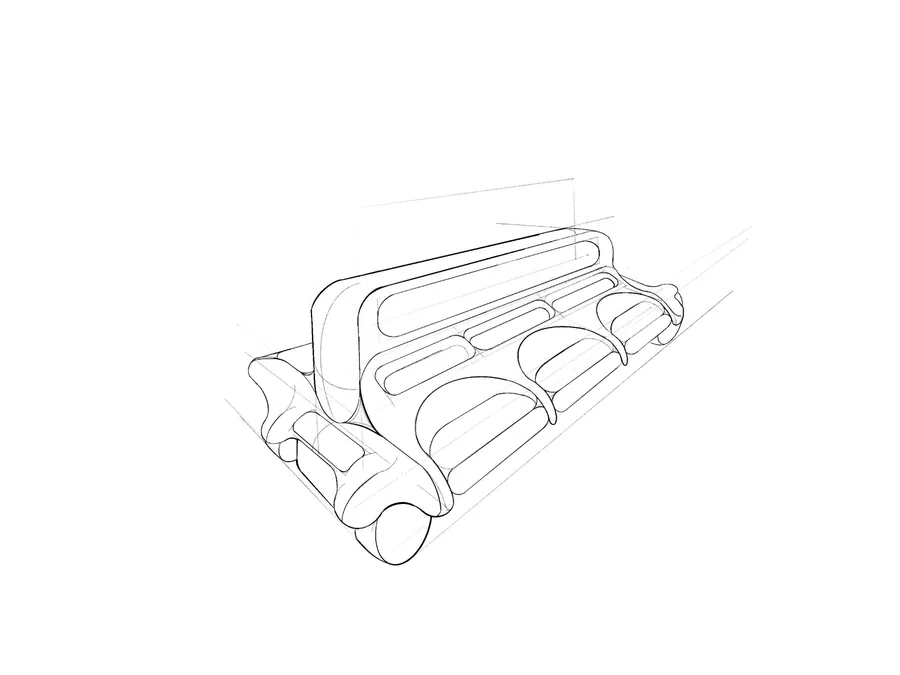
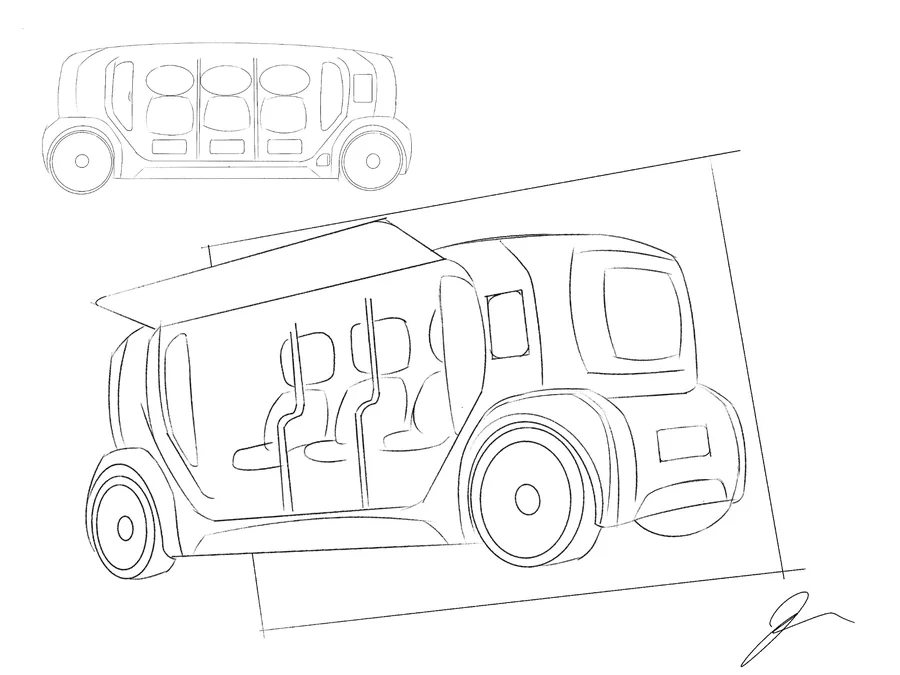
An early idea was a park bench that drives to you. That became three seats facing out under a lid that opens like a cabinet. From that first orthographic and perspective sketch, each round of iteration pushed one idea further: access, the medical wall, the service end and autonomy.
Early idea · the rolling benchFirst ortho + perspective
Iterations
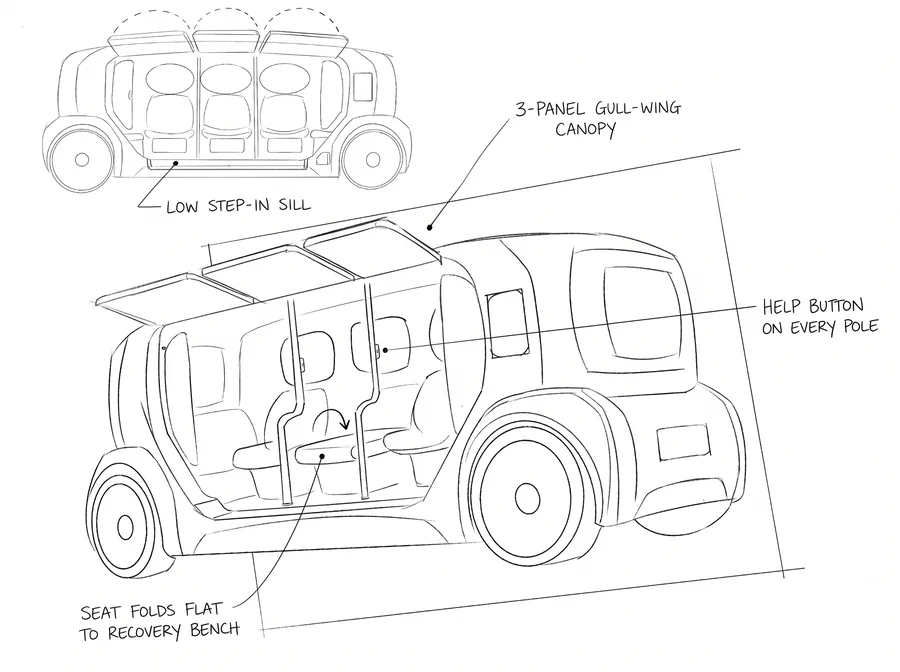
A · Access: split canopy, fold-flat seatB · The medical wallC · Service end: CORE bay + worker stepD · Autonomy + light
01PersonaRuth, the Reservoir loop and the gap between a fall and an ambulance.
02SketchHand sketches: the rolling bench, then ortho + perspective.
03IterateFour directions sketched over the same base, each with callouts.
04VisualizeAI-assisted renders driven by the sketches, held to one design.
05RefineConsistency passes and LAND's exact wordmark applied by hand.
Project summary
LIFELINE is an autonomous first-response vehicle for city parks, designed for 2035 around older visitors like Ruth, 78, who walks Central Park every morning. One in four adults over 65 falls each year, and inside a large park the hardest part is the wait between the fall and the ambulance. A fleet of six LIFELINE pods patrols the paths at walking pace. When someone falls or presses HELP, the nearest pod arrives within minutes and lifts its glass canopy to offer a seat, shelter, an AED, trauma kit, oxygen, blankets and water, plus a live video link to an emergency physician. A park medic can ride on its fold-out step. Four swappable LAND CORE batteries keep it running all day and can power equipment at the scene. LIFELINE then carries the patient to the nearest gate to meet the ambulance.
No. It covers the first minutes, which are the hardest to reach inside a park. It brings shelter, kit and a doctor to the person, then carries them to a gate where an ambulance can meet them.
Who is in control?
Every pod is supervised from a Parks Response Center that can take over remotely or stop it. On scene, the park medic is in charge: the vehicle holds position and waits for them.
Can anyone ride it?
It isn't a shuttle. It only carries people who need help, plus one companion, and the medic on the step.
How does it move through crowds?
At walking pace, with a soft chime and its path projected on the ground ahead. It yields to people and stops if anyone steps in front of it.
What happens when the batteries run low?
Pods rotate past the depot through the day. A ranger swaps the LAND CORE modules by hand in a few minutes while the others keep the park covered.
What about privacy?
Sensors are used for driving and processed on board. Video is shared only during an active call, and the screen always shows when the doctor can see you.